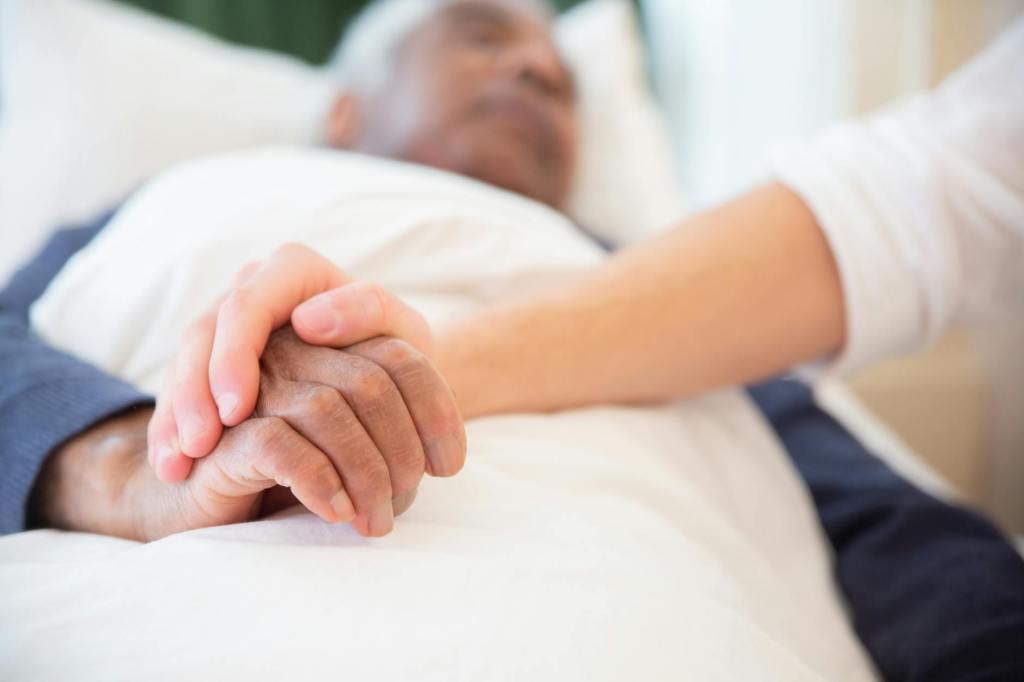
“Aren’t palliative and hospice the same thing?” No, they are different, but do share similarities! While both palliative patients and hospice patients are facing life-threatening illnesses, a palliative patient can still be receiving curative treatments. Hospice patients, meanwhile, are no longer receiving curative treatments.
Palliative Care
Both palliative and hospice care are holistic, taking the whole person into consideration, addressing not only physical concerns, but also social, psychological, and spiritual concerns. Palliative care providers help manage symptoms for someone with a life-threatening illness. They help improve a person’s quality of life, while a patient is still receiving medications or treatments (such as chemotherapy) that focus on prolonging life. They address all types of symptoms for patients, and are involved in care coordination, working with other providers as part of an inter-disciplinary team. They offer supportive care for patients and their families who are dealing with a long term illness. They can work with patients of any age, at any stage of their disease.
Palliative care providers may work with cancer patients, but they can be helpful for patients with other illnesses too, such as COPD, heart failure, and Parkinson’s.
Patients getting active treatment can be seen with the palliative team to manage symptoms such as pain or neuropathy. Where I work, our palliative care providers come to the center on certain days of the week, which is helpful to patients in that they don’t need to make multiple visits at multiple locations. They are “in house.” So we can be a one-stop-shop, so to speak! Sometimes, palliative providers may be in another location or part of a private practice.
Hospice care
Hospice care is part of the palliative continuum, picking up when a person no longer wants to receive life-prolonging treatments. That doesn’t mean the patient won’t get anything, and palliative care can still be part of the team. They can receive pain medications or other treatments that are comfort-oriented, not cure-oriented. Eating may shift to more pleasurable foods. Typically, a hospice patient won’t have any more invasive types of procedures done. The goal is comfort.
Hospice providers, like palliative providers, also work on improving the quality of life for someone while keeping them comfortable. They address spiritual and caregiver concerns, working with caregivers and the patients to give them a dignified experience during their last stage of life. Typically hospice patients are those who have 6 months or less to live.
Hospice care can be inpatient or at someone’s home. It can be in the hospital, where I’ve cared for hospice patients in the past, or it could be in extended-care facilities. So it doesn’t take place in just one location. It depends on the person’s desires and what the family and loved ones are able to do.
Hospice care may include bereavement care for the family, and sometimes even respite care, where the caregiver gets a short break before taking responsibility for care of their loved one again.
Something that I wish patients and their families understood is that hospice is a way for people to have more choice over how they spend their last days, weeks, or months. Most people want to be home, surrounded by their family during their last days, not in a hospital. But it is not always easy to have conversations about death and dying, and the culture in the states is not always conducive to this. If you’re curious about hospice or palliative care, check out the links below!
https://www.cancer.org/cancer/end-of-life-care/hospice-care/what-is-hospice-care.html
 Writing RN
Leave a comment