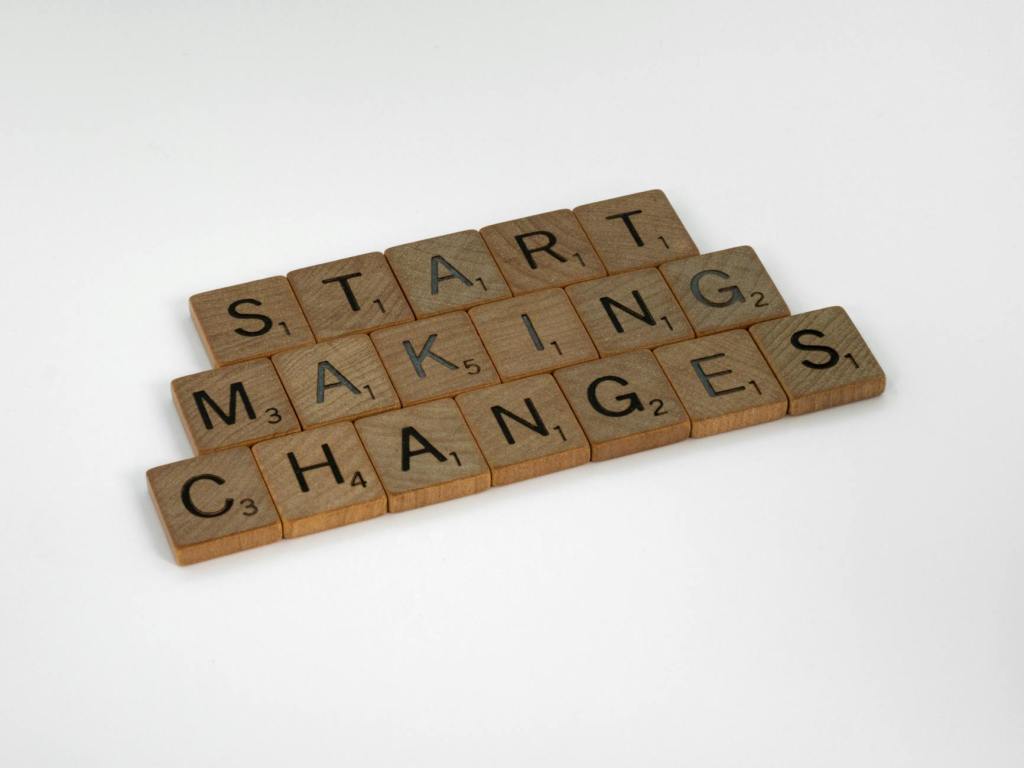
If you work in healthcare (or even if you don’t), you have most certainly seen your share of changes in the workplace! In the last article on change theory, I talked about the different reasons why people resist change. There are many. Like this one- I DON’T WANT TO! (insert temper tantrum/crocodile tears). This time, I’m taking a closer look at some specific theories behind organizational change and facilitators of change. (Incidentally, this all started with school and a module on change theory and health organizations. It’s interesting in a mildly morbid/trainwreck sort of way).
But first, let’s talk about ORCs!
Well, more like ORC- Organizational Readiness for Change. This has to do with the readiness and determination of people within an organization to change. It also describes their faith in the organization’s ability to actually make those changes. It is the change commitment plus the change efficacy. It’s like this- someone might be ready to change the procedure for utilizing a new IV kit and process, but they don’t think the hospital can follow through with it. This could stem from faith in leadership or the immediate manager or the whole organization. And this could relate to past experiences- how have changes gone in the past? Did they “stick”? So picture those things on a very large scale, hundreds of times over hundreds of people. (Honestly, I can’t imagine being responsible for rolling out major changes in a large organization- just writing about it makes it sound absolutely daunting.)
Organizational change hasn’t been studied nearly as much as personal change. But there are some theories that are utilized:
Lewin’s Theory of Planned Change
This can be summed up in three easy steps: 1. Unfreezing. 2. Moving. 3. Refreezing. How do you unfreeze people? I dunno. I’ve seen Star Wars-The Return of the Jedi (many, many times) and when Han Solo gets unfrozen it looks painful. More likely, in this scenario it has to do with getting people ready- talking about the change, getting it into their heads that the new thing is a good thing. For them and everyone else. But really, for them. It’s nice to say that something is good for your customer and benefits them. But why is it good for the employee? If employees only changing because they have to, well, I imagine that major change attempt is going to land in the fail pile.
John Kotter’s Eight Step Change Model
Okay here we go, eight steps from this Harvard Prof/Change Expert: 1. Increase Urgency. 2. Guiding team (build one). 3. Vision (what is it? Develop it!) 4. Communicate the plan. 5. Get rid of barriers/enable action. 6. Create some short term wins. 7. Build upon the changes (don’t give up). 8. Make it stick. (Which one do you think is the hardest? My guess is #8).
Phases of Change Theory by Lippitt
Lippitt’s theory expanded on Lewin’s theory. 1. What’s the problem? (diagnose it). 2. Motivation/capacity for change (assess it). 3. Motivation/resources (assess these). 4. What is the objective? 5. What’s the role of the change agent? 6. Maintain! 7. End the helping relationship (gradually).
Rogers Diffusion of Innovation
So of all the theories, this one seems to make the most sense me. This article explains all the theories, btw. 1. Step one is knowledge. 2. Persuade. (This one is pretty self-explanatory). 3. Decision to go with the changes or not. 4. Implement the changes. 5. Confirm that staff is going ahead with the new change.
Facilitators of change
What does that mean? Basically, it’s anything that helps bring the change to fruition. Often, we’re talking leadership here. Leadership can make or break a successful change. Where I work, this would be the nurse managers. They are the ones who inspire the employees to take on new ideas in an ongoing manner. Employees need to be followed up with, and management needs to make sure that the new policy or procedure or whatever is being followed.
There are ways in which organizations fall short– these include being too inflexible, skipping steps in the change process, and taking the necessary time to do things appropriately.
If it sounds like a lot, it is. That’s why there’s entire masters level degrees that revolve around this subject!
Think about some of the major changes we’ve all witnessed- COVID caused a whole slew of them, and organizations had to adapt. Like, overnight. Loads of people who didn’t consider themselves very tech-savvy learned how to teach courses online. Kids adapted to school-at-home days. So it can be done. And it is done, all the time. Those rapid changes that were forced on us had (and still have) an emotional response from many people. There were too many. That came too fast. That we didn’t have any say in. But when the change can be planned in advance, implemented with care, and followed up on, there is a much better chance of acceptance and success.
What do you think has helped with change at your organization? I’d love to hear from you!
 Writing RN
Leave a comment